Table of Contents
- The Hard Truth About Small Business Marketing
- Mistake 1: Unrealistic Expectations
- Mistake 2: No Clear Strategy
- Mistake 3: Poor Budget Allocation
- Mistake 4: Ignoring SEO Completely
- Mistake 5: Not Tracking Results
- Mistake 6: Inconsistency in Execution
- Mistake 7: Trying to Do Everything at Once
- Mistake 8: Choosing the Wrong Agency Partner
- How to Win at Digital Marketing as a Small Business
- Frequently Asked Questions
The Hard Truth About Small Business Marketing
Here is a sobering statistic: over 70% of small businesses report that their digital marketing efforts are not delivering the results they expected. Thousands of business owners invest their hard-earned money into websites, social media pages, and ad campaigns only to see little to no return on their investment. The frustration is real, and it leads many entrepreneurs to conclude that digital marketing simply does not work for small businesses.
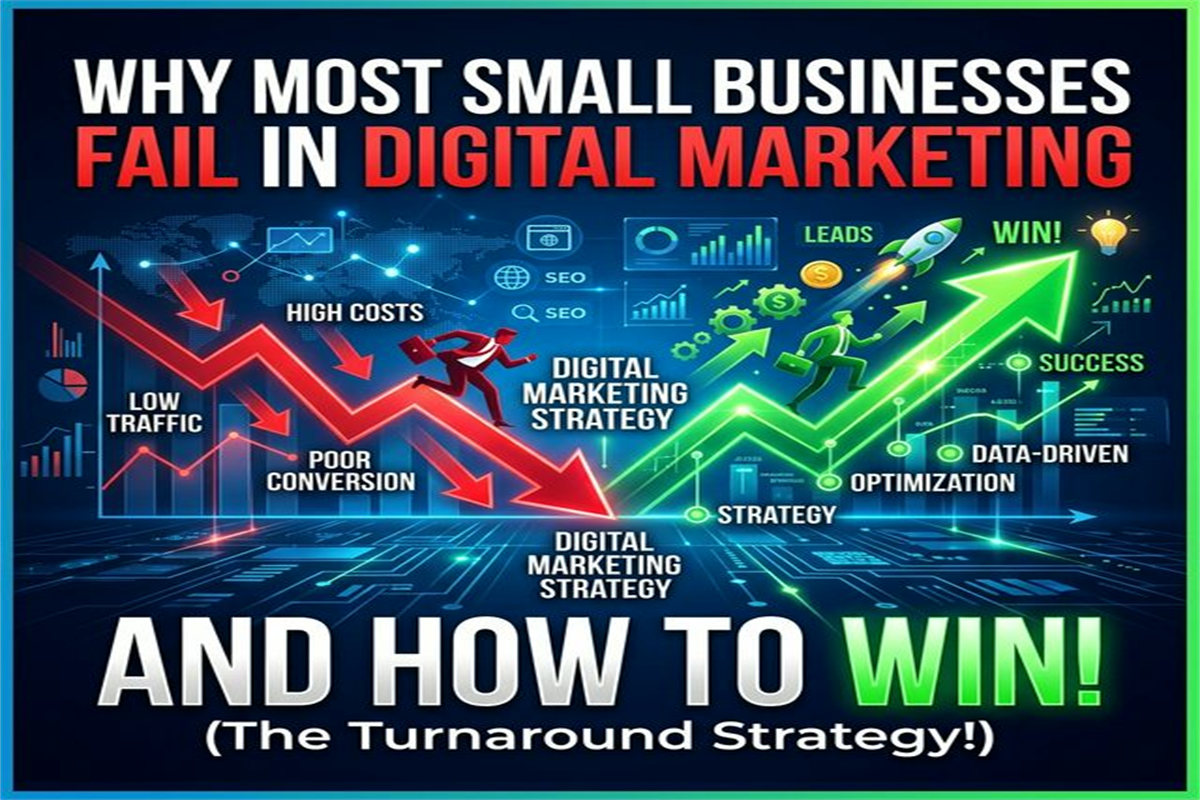
But that conclusion is wrong. Digital marketing works — it works incredibly well when done right. The problem is not the medium; it is the approach. Small businesses fail at digital marketing not because the tools are ineffective but because they fall into predictable, avoidable traps that sabotage their efforts before they ever have a chance to succeed.
In this guide, we are going to dissect the eight most common reasons small businesses fail at digital marketing, and more importantly, we are going to show you exactly how to avoid each one. Whether you are a startup just beginning your digital journey or an established business looking to improve your results, these insights will help you build a marketing engine that actually drives growth.
Mistake 1: Unrealistic Expectations
The number one killer of small business digital marketing efforts is not budget, skill, or competition — it is unrealistic expectations. Too many business owners expect overnight results. They launch a website and expect leads the next day. They post on social media for two weeks and wonder why they are not going viral. They run Google Ads for a month and declare the platform broken when they do not see immediate ROI.
The reality is that digital marketing is a marathon, not a sprint. Even the fastest channels — like Google Ads management — require weeks of data collection and optimization before they deliver consistent, profitable results. Organic channels like SEO and content marketing take months to gain momentum. Social media requires consistent effort over quarters, not days.
The businesses that succeed are the ones that commit to a realistic timeline. They understand that the first three months are about learning, testing, and building foundations. Months four through six are about optimization and scaling what works. And months seven through twelve are where the compounding effects of their efforts truly begin to pay off.
How to Fix This: Set specific, measurable goals with realistic timelines. Instead of saying you want more leads, define that you want 20 qualified leads per month within six months. Break that down into monthly milestones and track your progress. This approach keeps you focused and prevents the disappointment that comes from undefined expectations.
Mistake 2: No Clear Strategy
Would you build a house without a blueprint? Of course not. Yet countless small businesses dive into digital marketing without a clear, documented strategy. They create a Facebook page because everyone has one. They run Google Ads because a competitor does. They start a blog because someone told them content is king. None of these tactics work in isolation without a strategy connecting them.
A proper digital marketing strategy starts with understanding your target audience — their demographics, pain points, search behaviors, and decision-making process. It defines your unique value proposition and competitive positioning. It maps out the customer journey from awareness to purchase. And it identifies the specific channels, tactics, and content needed at each stage of that journey.
Working with a team that provides comprehensive content marketing services and social media marketing can help you develop a cohesive strategy where every element works together toward your business goals.
How to Fix This: Before spending a single rupee on marketing, document your strategy. Define your ideal customer profile, map their journey, choose two to three primary marketing channels, set clear KPIs, and create a 90-day action plan. Review and update this strategy quarterly.
Mistake 3: Poor Budget Allocation
Many small businesses either spend too little across too many channels or dump their entire budget into a single channel. Both approaches are recipes for failure. Spreading a $1,000 monthly budget across Google Ads, Facebook Ads, LinkedIn Ads, content creation, and SEO means each channel gets such a small allocation that none can achieve critical mass.
Conversely, putting everything into paid ads without investing in a proper website, landing pages, or conversion optimization means you are paying to send traffic to a leaky bucket. The visitors arrive but have no reason to convert because the foundation is weak.
How to Fix This: Allocate your budget based on your business stage. If you are new, invest 60% in building your digital foundation — a conversion-optimized website through professional web development, basic SEO setup, and essential content. Put the remaining 40% into one or two paid channels. As your foundation strengthens, you can gradually shift more budget to paid acquisition and advanced strategies.
Not Sure Where to Start with Your Marketing Budget?
Our team will analyze your business goals, competitive landscape, and current digital presence to create a customized marketing plan that maximizes every rupee you spend. No guesswork, just data-driven strategy.
Get a Free ConsultationMistake 4: Ignoring SEO Completely
Search engine optimization is the most overlooked marketing channel among small businesses, and it is also one of the most valuable. Many business owners skip SEO because the results are not immediate, or because they do not understand how it works. This is a critical mistake that leaves massive amounts of free, high-intent traffic on the table.
Consider this: when someone searches for your product or service on Google, they have already identified a need and are actively looking for a solution. This intent-driven traffic converts at significantly higher rates than traffic from social media or display advertising. And once you rank organically, that traffic continues flowing without ongoing ad spend.
Investing in best SEO services in India provides compounding returns. A blog post you publish today can drive traffic for years. A properly optimized service page can generate leads month after month. For businesses serving specific areas, local SEO services can put you at the top of local search results, capturing customers right when they are ready to buy.
How to Fix This: Start with the fundamentals. Ensure your website has proper technical SEO — fast loading speeds, mobile responsiveness, clean URL structure, and proper meta tags. Create service pages optimized for your primary keywords. Set up and optimize your Google Business Profile. Then develop a content plan that targets the questions your ideal customers are asking.
Mistake 5: Not Tracking Results
You cannot improve what you do not measure. An alarming number of small businesses have no analytics setup, no conversion tracking, and no regular reporting. They have no idea which marketing channels are driving leads, which campaigns are profitable, or where their money is being wasted.
Without tracking, every marketing decision is based on gut feeling rather than data. You might be killing a campaign that was about to turn profitable, or doubling down on a channel that looks busy but generates zero revenue. Proper analytics removes the guesswork and gives you the confidence to make informed decisions.
How to Fix This: At minimum, install Google Analytics 4, set up conversion tracking for all lead-generating actions on your website, and implement UTM parameters for all marketing links. Review your analytics weekly and create a monthly reporting dashboard that tracks your key metrics — traffic, leads, conversion rate, cost per lead, and revenue.
Mistake 6: Inconsistency in Execution
Consistency is the unsung hero of digital marketing success. Many small businesses start strong — posting daily on social media, publishing weekly blog posts, actively managing their ad campaigns. But after a few weeks or months, the enthusiasm fades. Posts become sporadic. The blog gets neglected. Ad campaigns run on autopilot without optimization.
Digital marketing algorithms reward consistency. Social media platforms show your content to more people when you post regularly. Google favors websites that consistently publish fresh, relevant content. Ad campaigns perform better with ongoing optimization and testing. When you go silent, you lose momentum that can take weeks or months to rebuild.
How to Fix This: Create a realistic content calendar that you can actually maintain. It is better to post three times a week consistently than daily for two weeks followed by silence. Batch create content to stay ahead of schedule. If you cannot maintain consistency in-house, partner with a team that offers social media marketing and content marketing services to maintain your marketing momentum.
Mistake 7: Trying to Do Everything at Once
Small business owners often try to be everywhere — Facebook, Instagram, LinkedIn, Twitter, YouTube, TikTok, Pinterest, Google Ads, email marketing, content marketing, and SEO all at once. This approach guarantees mediocrity across every channel rather than excellence in any one channel.
The most successful small business marketers focus on mastering one or two channels before expanding. They identify where their target audience spends time, become excellent at reaching and engaging that audience, and then gradually add new channels once the first ones are running profitably.
How to Fix This: Choose a maximum of two to three channels to start. For most B2B businesses, that means Google Search and LinkedIn. For B2C businesses, it might be Google Search and Instagram. For local businesses, Google Business Profile and local SEO services combined with Google Ads management is often the winning combination. Master these before adding more channels to your mix.
Mistake 8: Choosing the Wrong Agency Partner
Many small businesses have been burned by digital marketing agencies that over-promise and under-deliver. These agencies lock businesses into long-term contracts, deliver cookie-cutter strategies, provide vanity metrics instead of real results, and ultimately waste precious marketing budgets. This bad experience often sours business owners on digital marketing entirely.
Choosing the right agency partner is one of the most important decisions a small business can make. A good agency becomes an extension of your team — understanding your business goals, providing transparent reporting, and delivering strategies customized to your unique situation and budget.
How to Fix This: Look for agencies that offer transparent pricing, provide case studies with real results, do not lock you into long-term contracts, give you ownership of all accounts and data, and communicate regularly with clear reporting. Ask for references and speak to current clients before committing.
How to Win at Digital Marketing as a Small Business
Now that you understand the common pitfalls, here is a condensed roadmap for digital marketing success as a small business:
Step 1: Build a Strong Foundation. Invest in a professional, conversion-optimized website through professional web development. Ensure it loads fast, looks great on mobile, and clearly communicates your value proposition. This is non-negotiable — everything else builds on this foundation.
Step 2: Claim Your Local Presence. Set up and fully optimize your Google Business Profile. Implement local SEO strategies to appear in map results for relevant searches. Encourage and respond to customer reviews.
Step 3: Start with One Paid Channel. Choose Google Ads management for high-intent traffic or Meta Ads for awareness and demand generation. Set a reasonable test budget, track everything, and optimize weekly.
Step 4: Invest in SEO for Long-Term Growth. While paid ads drive immediate results, SEO builds an asset that generates free traffic for years. Start with on-page optimization and gradually build your content and link profile.
Step 5: Build Content and Social Proof. Create valuable content that addresses your audience's questions and challenges. Build social proof through testimonials, case studies, and reviews. Share this content consistently on your chosen social media channels.
Step 6: Measure, Optimize, and Scale. Review your metrics weekly. Double down on what is working and cut what is not. Once you achieve consistent profitability on your primary channels, expand to new channels and strategies.
The path to digital marketing success is not complicated, but it requires patience, consistency, and a willingness to make data-driven decisions. Whether you handle marketing in-house or partner with a professional team, these principles will serve as your guide to sustainable growth. Visit our digital marketing blog for more actionable insights and strategies.
Ready to Finally Get Digital Marketing Right?
Stop wasting time and money on strategies that do not work. Our team specializes in helping small businesses build profitable digital marketing systems from the ground up. Let us create a customized plan for your business.
Get a Free ConsultationFrequently Asked Questions